Friday, October 11, 2013
Current Connection: 1.2
In Richard H. Thaler's New York Times article entitled, "Financial Literacy, Beyond the Classroom," he argues that most Americans are "financially illiterate" and that their education is failing to help them keep themselves out of financial trouble.
Additionally, in the article, Thaler states, "Those who receive [financial education] do not perform noticeably better when it comes to saving more, for example, or avoiding ruinous debt." High Schooler's basic financial education, a poor excuse for an understanding of finances, seems to serve them no purpose. This is caused by a failure in America's educational system, a system notorious for its numerous shortcomings.
Later in the article, Thaler states, "In the meta-analysis, even the most time-intensive programs — those with more than 24 hours of education and training, almost the length of a college course — had no discernible effects just two years later." Within a couple of years learning the information, the students mostly forget the information, likely due to lack of use; therefore, the attempt to teach them was a failure and there was hardly a point in them learning the information in the first place.
Furthermore, Thaler states, "Although no approach offers a panacea, three types of efforts seem worthy of more attention." Thaler goes on to explain three ways in which financial education could be better delivered to students, none of which are being tried in a large, meaningful way. If new ways of learning and educating are not tried, then how can the current system ever be improved upon?
On a related note, the quote about the most time-intensive programs lasting over 24 hours reminds me of the idea that one must spend 10,000 hours doing one task to become a master at it. Obviously, this is not meant to be taken literally; however, how can one expect to become truly good at something when so little time is spent learning. One could feasibly get 24 hours of experience in and area without even sleeping. Certainly, the student must spend additional time outside of and after his or her class expanding his or her knowledge and experience in order to become truly good at whatever it is that he or she is trying to accomplish.
In conclusion, the current methods of delivering a financial education to Americans are almost completely ineffective and new methods exist and should be attempted.

Sunday, September 8, 2013
Current Connection 1.1
In James Holloway's article entitled "School Imposes Compulsory Minecraft Lessons" on Gizmag, he informs the reader that a Swedish school has decided to start using a video game, Minecraft, to educate it's students.
For example, in the article, James Holloway, a writer for Gizmag, states, "A Swedish school has made headlines, first at home and then abroad, by making super-popular build-em-up video game Minecraft compulsory for students aged 13." The school has done something quite uncommon, making Minecraft, a video game about building whatever you can imagine, a component of its students' education. Though the students will only play the game for a short time while they're 13, they will still have the opportunity to enjoy a new way of getting educated.
In addition, James Holloway also states in the article that "Minecraft, which lets players share a procedurally generated world, and fill it with constructions built lovingly and painstakingly out of a variety of texture mapped cubes, is a stellar example. It inspires thought and creativity without repelling players with rote learning, rigid structure, or the fusty whiff of the classroom." Minecraft allows its players, the students, to freely express their creativity. They can escape the boring classroom to learn in a much more enjoyable way.
Additionally, James Holloway writes, "It's not as if Minecraft has replaced one of the core subjects on the school's timetable. This is merely something the school's students will do for a while when they're 13." The game has not replaced anything important in the students' school careers. Minecraft has only been used to temporarily supplement their education.
On a related note, schools and classrooms all over the world are implementing Minecraft, as well as many other kinds of games, in order to help educate children and get children interested in learning. This fun change could help reverse the idea amongst some kids, especially American children and teenagers, that school is not a good place to go to.
In conclusion, a Swedish school, by implementing a video game into the curriculum, has become one of the potential leaders of the world as we continue into the future trying to find a way to better educate our youth.
For example, in the article, James Holloway, a writer for Gizmag, states, "A Swedish school has made headlines, first at home and then abroad, by making super-popular build-em-up video game Minecraft compulsory for students aged 13." The school has done something quite uncommon, making Minecraft, a video game about building whatever you can imagine, a component of its students' education. Though the students will only play the game for a short time while they're 13, they will still have the opportunity to enjoy a new way of getting educated.
In addition, James Holloway also states in the article that "Minecraft, which lets players share a procedurally generated world, and fill it with constructions built lovingly and painstakingly out of a variety of texture mapped cubes, is a stellar example. It inspires thought and creativity without repelling players with rote learning, rigid structure, or the fusty whiff of the classroom." Minecraft allows its players, the students, to freely express their creativity. They can escape the boring classroom to learn in a much more enjoyable way.
Additionally, James Holloway writes, "It's not as if Minecraft has replaced one of the core subjects on the school's timetable. This is merely something the school's students will do for a while when they're 13." The game has not replaced anything important in the students' school careers. Minecraft has only been used to temporarily supplement their education.
On a related note, schools and classrooms all over the world are implementing Minecraft, as well as many other kinds of games, in order to help educate children and get children interested in learning. This fun change could help reverse the idea amongst some kids, especially American children and teenagers, that school is not a good place to go to.
In conclusion, a Swedish school, by implementing a video game into the curriculum, has become one of the potential leaders of the world as we continue into the future trying to find a way to better educate our youth.
Monday, April 8, 2013
Short Story Reflection
I have been asked to write a short story for my English class. I am to use a character created on Heromachine. I am also supposed to write the story with the purpose of teaching the reader the theme.
Using Heromachine to create a character is probably the only easy thing about this assignment thus far. I found the creation of the character to be an enjoyable thing to do.
The most difficult thing so far has been to come up with a theme and story to write about. I am not very creative when it comes to anything at all, so I find the task of writing my own story rather daunting.
Currently, my main character is called Merica Man, though this will likely change when I come up with a real story. Merica Man is an extremely patriotic senior citizen who is convinced that he must save America from certain destruction. He dresses in flamboyant outfits of red, white, and blue and keeps his gray hair fashioned into two huge spikes.
Writing this story without feeling like a poor writer is probably going to be one of the most difficult writing assignments of the year. I am not looking forward to it, to be honest.
Using Heromachine to create a character is probably the only easy thing about this assignment thus far. I found the creation of the character to be an enjoyable thing to do.
The most difficult thing so far has been to come up with a theme and story to write about. I am not very creative when it comes to anything at all, so I find the task of writing my own story rather daunting.
Currently, my main character is called Merica Man, though this will likely change when I come up with a real story. Merica Man is an extremely patriotic senior citizen who is convinced that he must save America from certain destruction. He dresses in flamboyant outfits of red, white, and blue and keeps his gray hair fashioned into two huge spikes.
Writing this story without feeling like a poor writer is probably going to be one of the most difficult writing assignments of the year. I am not looking forward to it, to be honest.
Sunday, March 10, 2013
BR2: The Return of the King
Title: The Return of the King

Author: J. R. R. Tolkien
Conversation with a Character
"Hi Frodo," I said to Frodo, the main character in The Return of the King.
"Hi," Frodo replied.
"How did you feel about the time when Samwise had to use the ring save you from the orcs in the tower of Cirith Ungol?" I asked him.
"I was quite surprised that he was able to muster up the strength and courage to save me. I was still knocked out by the poison of the giant spider, Shelog, and was certainly doomed to be taken to Sauron and tortured for information," he answered.
"How did you feel about Gollum betraying you and Sam to the spider in order to steal the ring for himself?" I asked.
"I was surprised because I thought I had actually managed to tame Gollum, but I was terribly mistaken. I should have seen the betrayal coming like Sam did," he said.
"How did you feel about the Shire getting taken over?" I asked Frodo.
"Obviously, I was not happy that Sharkey, Saruman, decimated my homeland by cutting down many trees and oppressing all the hobbits. I was happy that Wormtongue, Saruman's servant, killed Saruman because of his abuse. I'm glad that the Shire was eventually able to heal after all the abuse it was put through," Frodo said.
"How did you feel about Gollum's fate?" I asked.
"I wasn't happy that he had to die, but he played a key role in the destruction of the ring he cherished. I would have finally been taken by the corruption of the ring and saved it for myself had he not tried stolen it. I was lucky that he took the ring from me and fell into Mount Doom with it, destroying it forever," replied Frodo.
"How did Merry and Pippin feel about being separated?" I asked.
"They were both upset about being separated when the nazgul showed up and Gandalf took Pippin to Minas Tirith, a great fortress-city. Pippin then swore his loyalty to the Steward of Gondor, Denethor.
Merry, however, had to stay with King Theoden and swore his loyalty to him," Frodo said.
"How did you feel about traveling through Mordor, 'The Land of Shadow?'" I asked.
Traveling through Mordor was the most difficult thing I have ever done. Every moment was filled with agony and exhaustion. The ring felt as though it would pull me down to the ground if I let it. Sam and I nearly did not make it to Mount Doom and were completely out of food. We had many close encounters with orcs, but we managed to avoid capture," replied Frodo.
A Different Ending
"How did you feel about the fate of you and the ring?" I asked Frodo.
"I was more than a little disappointed that Gollum pushed me into the lava at Mount Doom and took the ring for himself. Gollum ran away from the volcano and was soon found and captured by the servants of Sauron. They took Gollum and the ring to Sauron and Sauron reacquired the ring and the power it holds. Sauron was then able to conquer all of Middle Earth, murdering or enslaving all living things there," Frodo explained.
"What about the fate of your friends?" I asked.
"Aragorn, Legolas, Gimli, and Gandalf were all slain in battle outside the gates of Mordor immediately after my demise. Sam was killed by orcs when he was discovered hiding just outside Mount Doom. Pippin and Merry were killed by orcs later on," Frodo said.

Author: J. R. R. Tolkien
Conversation with a Character
"Hi Frodo," I said to Frodo, the main character in The Return of the King.
"Hi," Frodo replied.
"How did you feel about the time when Samwise had to use the ring save you from the orcs in the tower of Cirith Ungol?" I asked him.
"I was quite surprised that he was able to muster up the strength and courage to save me. I was still knocked out by the poison of the giant spider, Shelog, and was certainly doomed to be taken to Sauron and tortured for information," he answered.
"How did you feel about Gollum betraying you and Sam to the spider in order to steal the ring for himself?" I asked.
"I was surprised because I thought I had actually managed to tame Gollum, but I was terribly mistaken. I should have seen the betrayal coming like Sam did," he said.
"How did you feel about the Shire getting taken over?" I asked Frodo.
"Obviously, I was not happy that Sharkey, Saruman, decimated my homeland by cutting down many trees and oppressing all the hobbits. I was happy that Wormtongue, Saruman's servant, killed Saruman because of his abuse. I'm glad that the Shire was eventually able to heal after all the abuse it was put through," Frodo said.
"How did you feel about Gollum's fate?" I asked.
"I wasn't happy that he had to die, but he played a key role in the destruction of the ring he cherished. I would have finally been taken by the corruption of the ring and saved it for myself had he not tried stolen it. I was lucky that he took the ring from me and fell into Mount Doom with it, destroying it forever," replied Frodo.
"How did Merry and Pippin feel about being separated?" I asked.
"They were both upset about being separated when the nazgul showed up and Gandalf took Pippin to Minas Tirith, a great fortress-city. Pippin then swore his loyalty to the Steward of Gondor, Denethor.
Merry, however, had to stay with King Theoden and swore his loyalty to him," Frodo said.
"How did you feel about traveling through Mordor, 'The Land of Shadow?'" I asked.
Traveling through Mordor was the most difficult thing I have ever done. Every moment was filled with agony and exhaustion. The ring felt as though it would pull me down to the ground if I let it. Sam and I nearly did not make it to Mount Doom and were completely out of food. We had many close encounters with orcs, but we managed to avoid capture," replied Frodo.
A Different Ending
"How did you feel about the fate of you and the ring?" I asked Frodo.
"I was more than a little disappointed that Gollum pushed me into the lava at Mount Doom and took the ring for himself. Gollum ran away from the volcano and was soon found and captured by the servants of Sauron. They took Gollum and the ring to Sauron and Sauron reacquired the ring and the power it holds. Sauron was then able to conquer all of Middle Earth, murdering or enslaving all living things there," Frodo explained.
"What about the fate of your friends?" I asked.
"Aragorn, Legolas, Gimli, and Gandalf were all slain in battle outside the gates of Mordor immediately after my demise. Sam was killed by orcs when he was discovered hiding just outside Mount Doom. Pippin and Merry were killed by orcs later on," Frodo said.
Monday, February 25, 2013
CC4: Taxes
Margaret Collins, a writer for Yahoo! News, states in her article, "Cost of Dropping Citizenship Keeps U.S. Earners From Exit," that the IRS has taxes and fees in place that essentially trap extremely wealthy people in America.
In the article, Margaret Collins says, "Exit taxes and other costs make it prohibitive for most high-income taxpayers and small-business owners to leave the U.S., though they may want to go because of higher taxes at the federal level and in states such as California." The exit taxes are designed to prevent prevent people who have a lot of money from leaving the U.S.. I am not one of those wealthy people, but this seems a little unfair to me.
Margaret Collins states in the article, "A high-income couple worth $100 million whose assets have $50 million in gains may have a $10 million tax liability if they decided to leave this year." This theoretical couple has enough money to live luxuriously anywhere in the world, even after that significant amount of money is taken. It still seems wrong to take so much money that they (theoretically) earned and essentially make them pay to a huge some of money just to leave the U.S.
Also stated by Margaret Collins in the article, "If the owner of a limited liability company establishes a foreign corporation conducting business in the U.S., it may have to pay several layers of U.S. income tax. Those include a top 35 percent corporate tax, a 30 percent so-called branch profits tax and as much as 43.4 percent tax on non-qualified dividends distributed to a shareholder, Entin said." This means that if a business is moved out of the U.S. but still conducts within the U.S., then the business will be subjected to much higher taxes than if it had simply remained within the U.S.. This discourages businesses from taking their money elsewhere.
Benjamin Franklin, one of the U.S.'s founding fathers, once said, "In this world nothing can be said to be certain, except death and taxes." This is certainly true in this case. The article even mentions that if someone who moved out of the U.S. but still has children here dies, then there are levies similar to the estate tax that the money has to go through before the children can receive the fraction of the money that will be left.
While millions of illegal immigrants receive amnesty and the benefits paid for by taxpayers, the people who pay for the majority of those benefits are stuck in the country.
In the article, Margaret Collins says, "Exit taxes and other costs make it prohibitive for most high-income taxpayers and small-business owners to leave the U.S., though they may want to go because of higher taxes at the federal level and in states such as California." The exit taxes are designed to prevent prevent people who have a lot of money from leaving the U.S.. I am not one of those wealthy people, but this seems a little unfair to me.
Margaret Collins states in the article, "A high-income couple worth $100 million whose assets have $50 million in gains may have a $10 million tax liability if they decided to leave this year." This theoretical couple has enough money to live luxuriously anywhere in the world, even after that significant amount of money is taken. It still seems wrong to take so much money that they (theoretically) earned and essentially make them pay to a huge some of money just to leave the U.S.
Also stated by Margaret Collins in the article, "If the owner of a limited liability company establishes a foreign corporation conducting business in the U.S., it may have to pay several layers of U.S. income tax. Those include a top 35 percent corporate tax, a 30 percent so-called branch profits tax and as much as 43.4 percent tax on non-qualified dividends distributed to a shareholder, Entin said." This means that if a business is moved out of the U.S. but still conducts within the U.S., then the business will be subjected to much higher taxes than if it had simply remained within the U.S.. This discourages businesses from taking their money elsewhere.
Benjamin Franklin, one of the U.S.'s founding fathers, once said, "In this world nothing can be said to be certain, except death and taxes." This is certainly true in this case. The article even mentions that if someone who moved out of the U.S. but still has children here dies, then there are levies similar to the estate tax that the money has to go through before the children can receive the fraction of the money that will be left.
While millions of illegal immigrants receive amnesty and the benefits paid for by taxpayers, the people who pay for the majority of those benefits are stuck in the country.
Friday, February 15, 2013
Topic of Choice: Minecraft
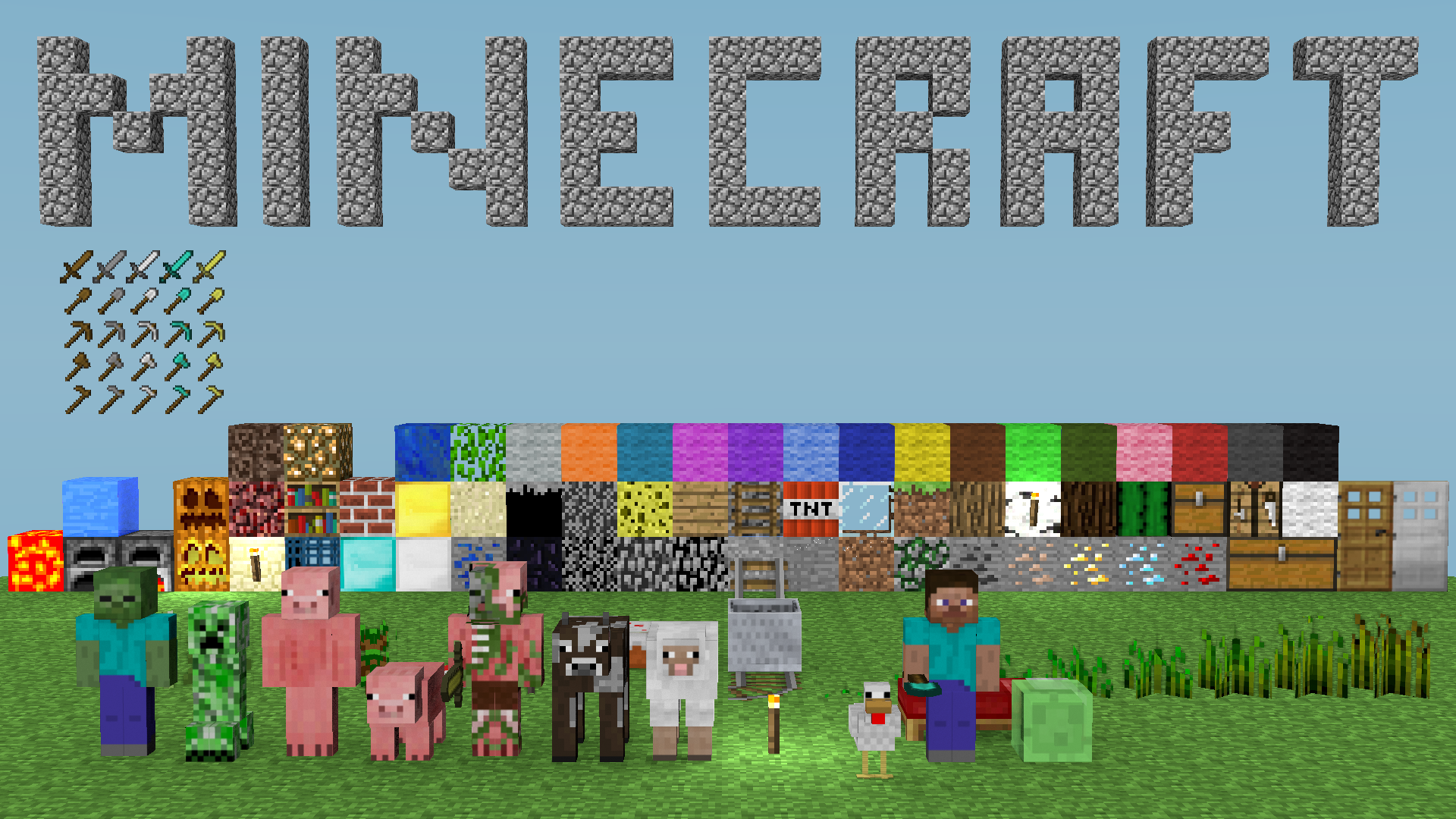
The mining/surviving features of Minecraft are a part of what I would consider the less interesting of the two ways to play. The player starts off in a world of blocks with nothing but his or her fists to punch down trees with. After beating down his or her first tree, the player can use the wood to craft an axe to gather wood faster, or, perhaps, to craft a wooden pickaxe to gather stone and begin his or her mining adventure in the ground.
The building feature in Minecraft is extremely easy to understand and use and can be accurately described as "virtual legos." Whether it's an extravagant hut or a homely palace, it can be built with ease in Minecraft. The player's creation can be anything they can think of! Basically, if it can be thought of, it can be built if time (as well as a little effort) is put into the creation.
Not only can players all this digging and building alone in singleplayer, but also cooperatively over the internet. They do this by connecting to servers such as StompzCraft which are hosted by a third party. After they connect, the players can then work with (or against) each other to do whatever they wish.
With nearly 10 million copies sold on the PC alone, Minecraft is one of the most well-known video games around. That said, the developers of the game have not spent a single cent in advertising the game. The game has acquired this runaway success through "word of mouth," specifically, the flood of songs and videos that the game has inspired on YouTube.
I first played Minecraft just over two years ago. Since then, I have spent quite a bit of time both digging and building. Probably a little bit too much time. Whether or not I have wasted too much time on this game is irrelevant because I enjoyed every moment spent. I and many others will likely continue to build in our little imaginary worlds for the foreseeable future.
For more information about Minecraft, visit here or here.
Alliteration
Allusion
Oxymoron
Thursday, February 7, 2013
CC3: Longest Marriage
Lauren Sher, a writer for ABC News, states in her article, "Connecticut Couple Honored as 'Longest Married' in U.S.," that John and Ann Betar have been married for over 80 years, making their marriage the longest known marriage in the U.S. today.
In the article, Lauren Sher states, "John and Ann Betar of Fairfield, Conn., said "I do" on Nov. 25, 1932, and have been happily married for 80 years." These people must truly be living their American Dream. To be happily married for such a long time is quite rare and is a rather enviable position in today's age where marriages end in divorce more often than not.
Lauren Sher also states in the article, "Together they have five children, 14 grandchildren and 16 great-grandchildren." Not only is this couple happy in their in long-lived marriage, but they also have a family together. This pair has accomplished what many would consider to be the American Dream.
Also stated by Lauren Sher in the article, "The Betars said they delight in the newer generations of their family, and their descendants return the compliment." From this perspective, this family seems to have everything going for them. The couple has a large, happy family, something that is not seen too frequently anymore.
This couple has been happily married for a very long time. This is the opposite of most marriages in America now. A typical marriage now is a short and unhappy one, an unfortunate trend that is turning marriage into something that people take far too lightly.
The Betars are living the American Dream of a happy, lengthy marriage. This couple is an inspirational example of a successful marriage.
In the article, Lauren Sher states, "John and Ann Betar of Fairfield, Conn., said "I do" on Nov. 25, 1932, and have been happily married for 80 years." These people must truly be living their American Dream. To be happily married for such a long time is quite rare and is a rather enviable position in today's age where marriages end in divorce more often than not.
Lauren Sher also states in the article, "Together they have five children, 14 grandchildren and 16 great-grandchildren." Not only is this couple happy in their in long-lived marriage, but they also have a family together. This pair has accomplished what many would consider to be the American Dream.
Also stated by Lauren Sher in the article, "The Betars said they delight in the newer generations of their family, and their descendants return the compliment." From this perspective, this family seems to have everything going for them. The couple has a large, happy family, something that is not seen too frequently anymore.
This couple has been happily married for a very long time. This is the opposite of most marriages in America now. A typical marriage now is a short and unhappy one, an unfortunate trend that is turning marriage into something that people take far too lightly.
The Betars are living the American Dream of a happy, lengthy marriage. This couple is an inspirational example of a successful marriage.
Subscribe to:
Posts (Atom)